8 hr
Pompeii & Vesuvius Day Tour from Naples with Lunch
- Expert local guide
- Small group
- Skip-the-line access
- Free cancellation
Pompeii And Vesuvius Wine Tour — Ruins, Crater & Cellar Access
Ash-sealed streets below, volcanic vines above.
Compare fares, pick the fit — all bookings are mobile-voucher and eligible for free cancellation where shown.
8 hr
7 hr 30 min
8 hr
| Experience | From | Duration | Rating | Skip-the-line | Guide | Small group | Price | |
|---|---|---|---|---|---|---|---|---|
|
Guided Experience
Most popular
Pompeii & Vesuvius Day Tour from Naples with Lunch
|
Naples | 8 hr | ★ 4.8 | ✓ | ✓ | ✓ | €53 | Book → |
|
Guided Experience
Pompeii & Vesuvius Day Trip from Naples
|
Naples | 7 hr 30 min | ★ 4.3 | ✓ | ✓ | ✓ | €88 | Book → |
|
Guided Experience
Pompeii & Mount Vesuvius Day Tour from Naples or Sorrento
|
Naples or Sorrento | 8 hr | ★ 4.7 | ✓ | ✓ | ✓ | €92 | Book → |
Worth it for wine-curious visitors with a full day
A pompeii and vesuvius wine tour bundles the 20 EUR archaeological site ticket with transport up the volcano and a tasting at a working estate on the slopes. What you pay above that ticket buys the part you cannot easily replicate alone: a guided walk through the excavations, then Lacryma Christi poured where the Piedirosso and Caprettone vines actually grow in black volcanic soil. Combined pompeii and vesuvius wine tour tickets typically undercut booking the ruins, the crater trail and a cellar visit separately, and they remove the awkward transfer between the UNESCO ruins and the national park. It pays off for travellers who want both the ancient city and the terroir behind it, and for anyone without a car. It does not pay off for hardcore archaeology people, who will find the site portion compressed, or for teetotallers paying for wine they will not drink.
Bottom line: Book the combined Pompeii and Vesuvius tour if you want the ancient city and the volcanic vineyards in one day; skip it if the ruins alone are the reason you came.
Hand-picked experiences loved by thousands of travelers
8 hours
Free Cancellation
Discover ancient ruins, taste volcanic wines, and hike an active crater in one unforgettable day
8.5 - 9 hours
Free Cancellation
Explore ancient Pompeii's frozen streets and summit an active volcano with authentic Neapolitan pizza
6 hours
Free Cancellation
Explore ancient ruins with an expert archaeologist, then savor volcanic wines and regional cuisine on Mount Vesuvius
9 hours
Free Cancellation
Visit the ancient ruins via express rail, explore with a guide, then savor wines and lunch at a volcanic vineyard.
7 hours
Free Cancellation
Discover ancient Roman ruins and hike an active volcano on this guided excursion with authentic pizza lunch
5 hours
Free Cancellation
Explore ancient ruins with an expert archaeologist, then savor volcanic wines and gourmet cuisine at a Mount Vesuvius vineyard
8 - 10 hours
Free Cancellation
Uncover ancient history, ride through volcanic vineyards, and savor Vesuvian wines on this guided adventure
7 hours
Free Cancellation
Explore ancient Roman ruins with an expert archaeologist, then savor regional wines and cuisine at a vineyard
Arrive at Porta Marina to collect tickets and maps.
Tour the heart of Roman public life.
Walk through the ancient gladiatorial arena.
Travel to the slopes for wine tasting.
The central heart of the city where temples and administrative buildings met.
camera
Built around 70 BC, this is one of the oldest surviving Roman arenas.
camera
A suburban villa famous for its vibrant, preserved frescoes.
camera
A haunting site displaying casts of the volcano's victims.
camera
A religious site featuring ancient columns and a central plaza.
camera
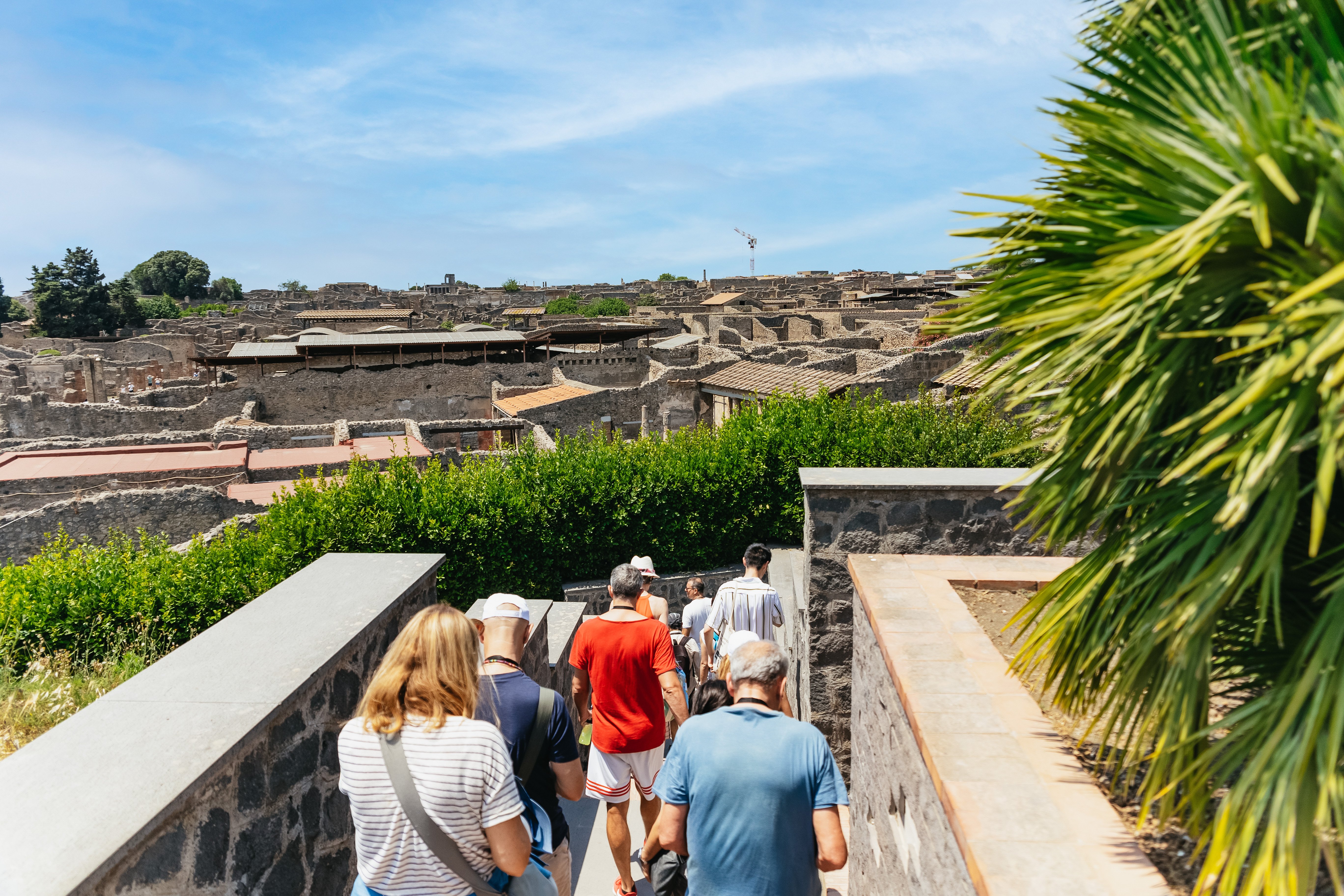
You arrive at the Porta Marina entrance between 09:00 and 10:30, the recommended window, before the light hardens and the unshaded stones begin to hold heat. You present the 20 EUR standard adult ticket, step through the gate, and climb the ramp Roman sailors once used. The Forum opens ahead.
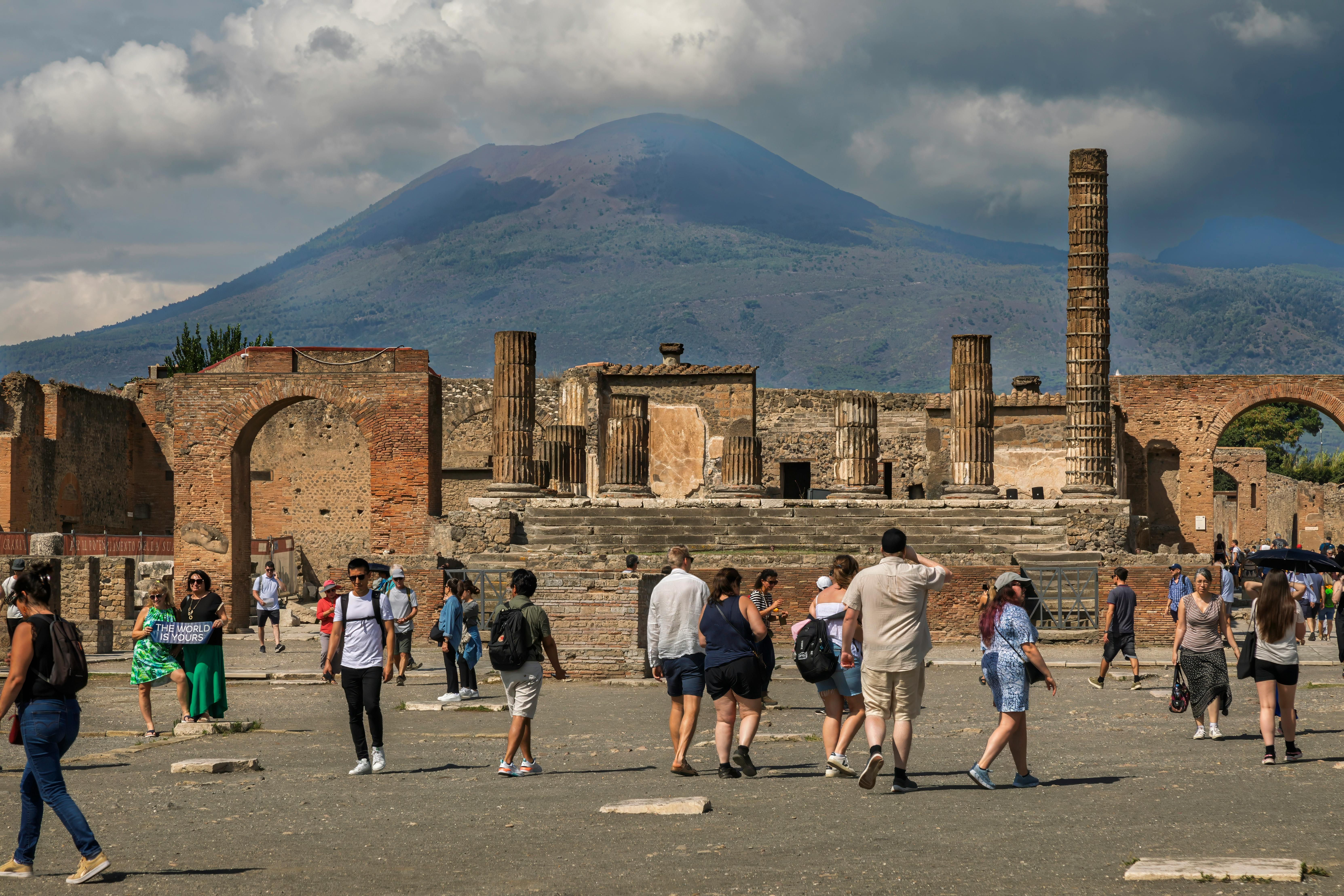
You look north and see the answer to whether Vesuvius is visible from Pompeii: the cone sits square in the frame, flattened by haze.
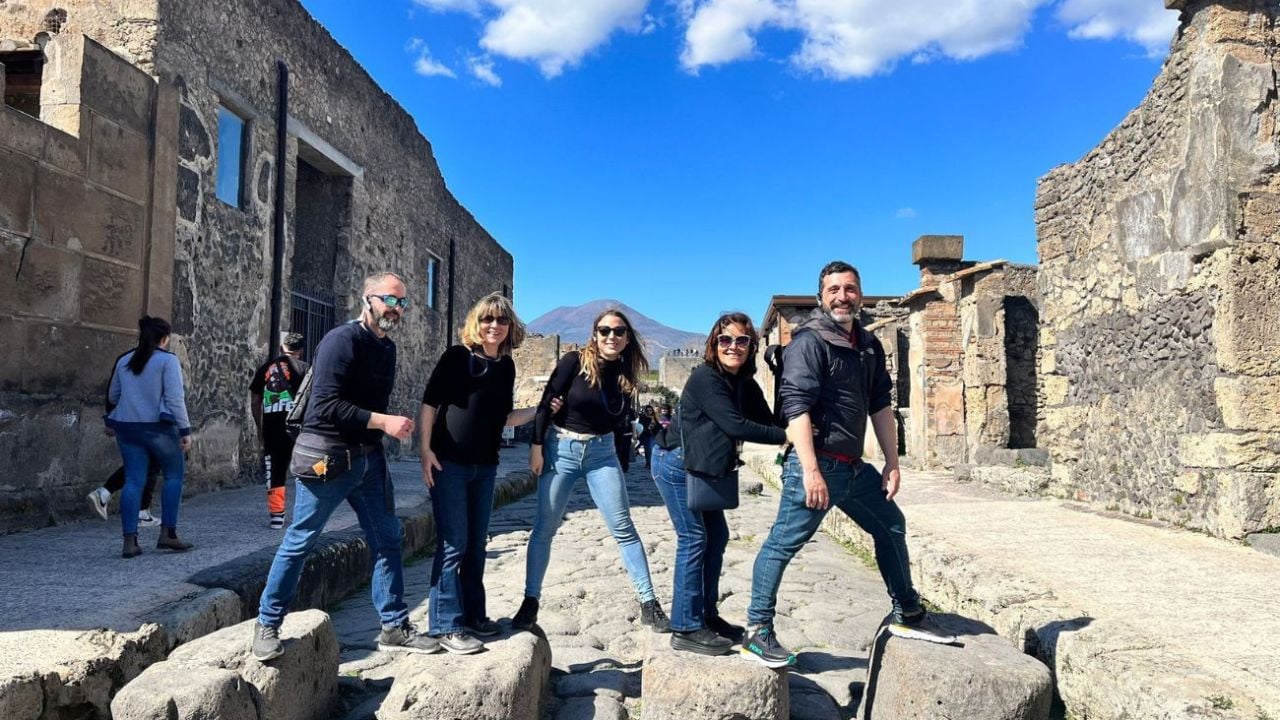
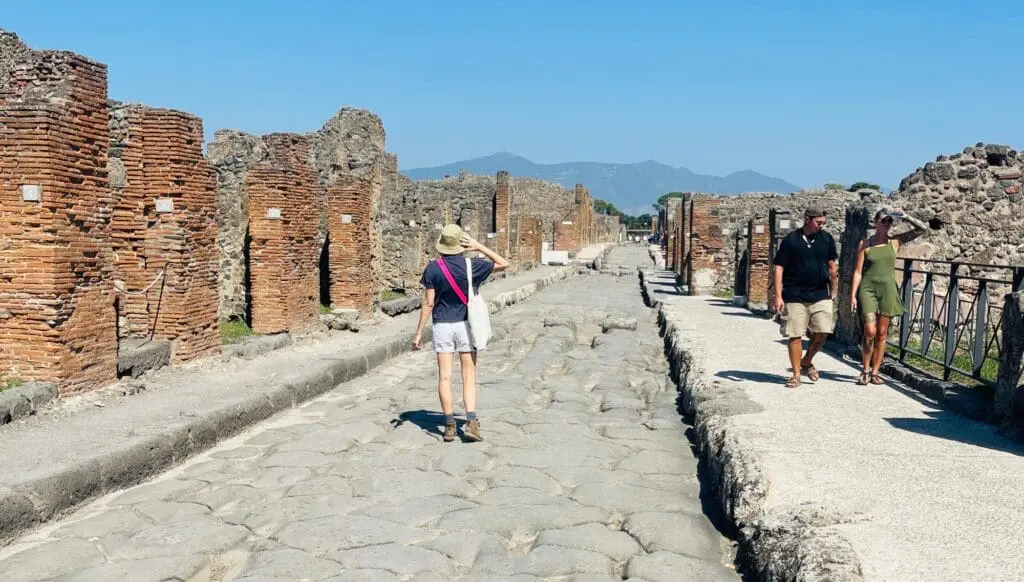
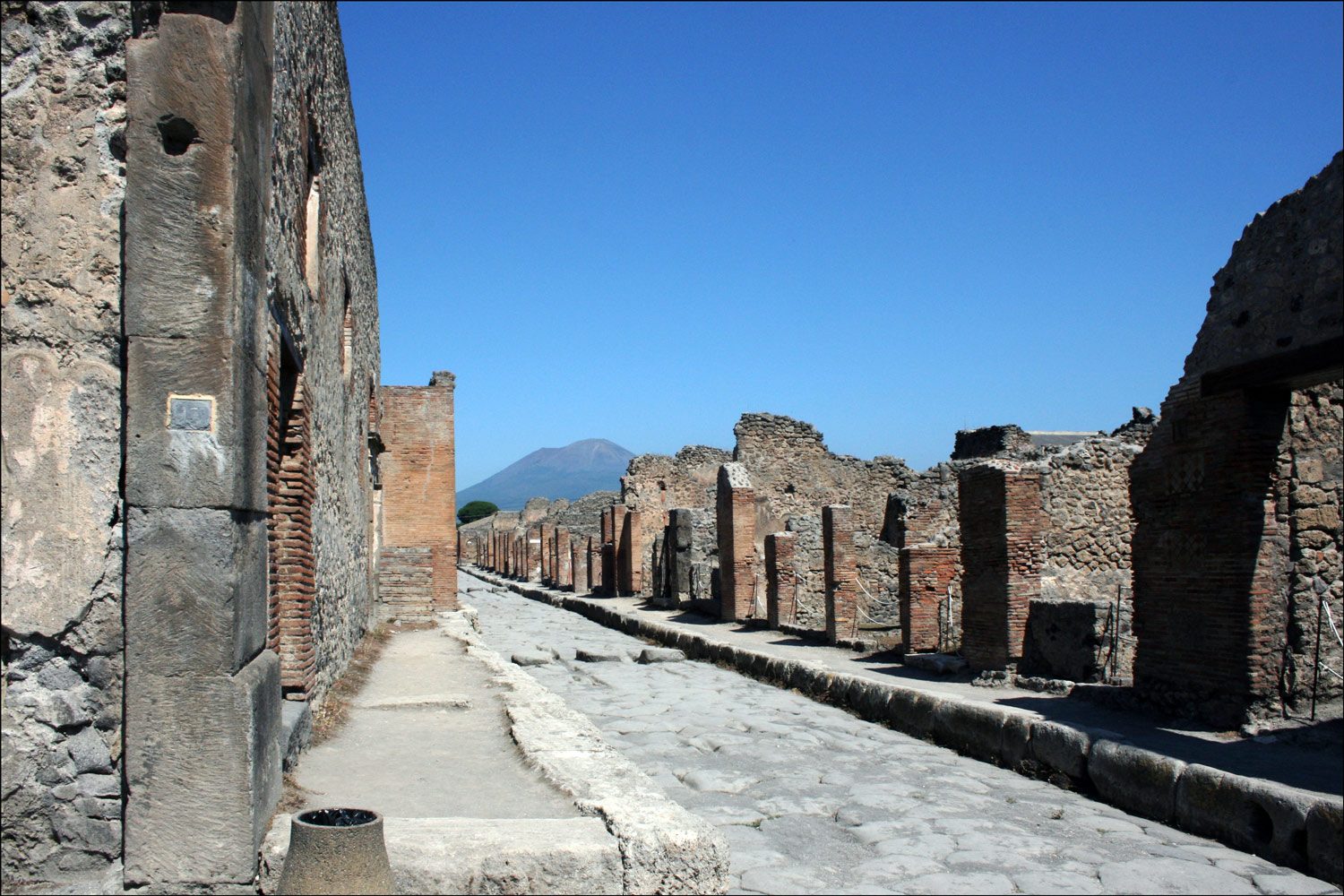
You walk the basalt of Via dell'Abbondanza. You count the stepping stones at each crossing, spaced for cart axles. You pause at a thermopolium counter, its terracotta jars sunk into masonry, then continue to the Stabian Baths and the plaster casts in the Granai del Foro. Water bottles fill at the public fountains that still run.
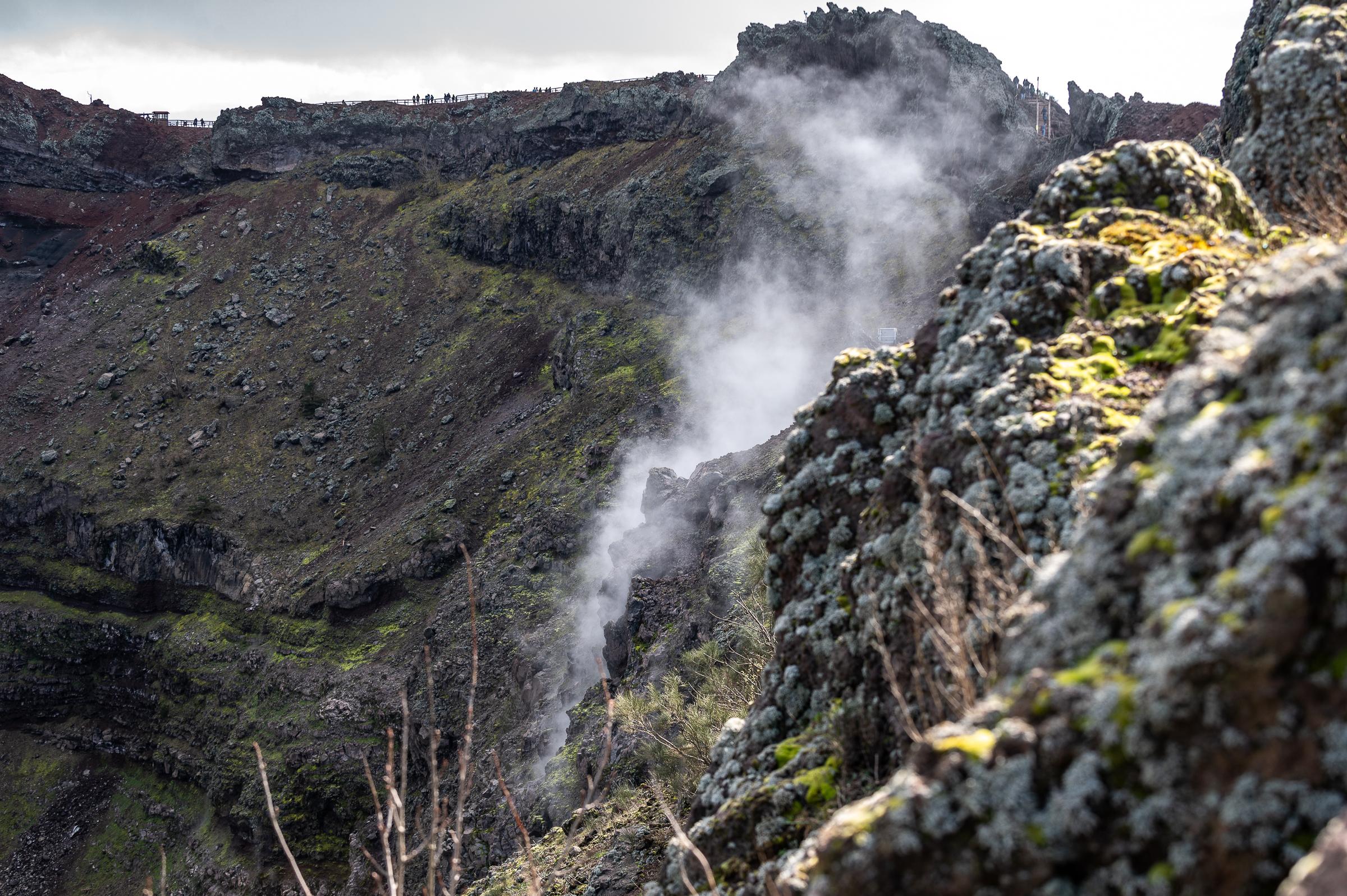
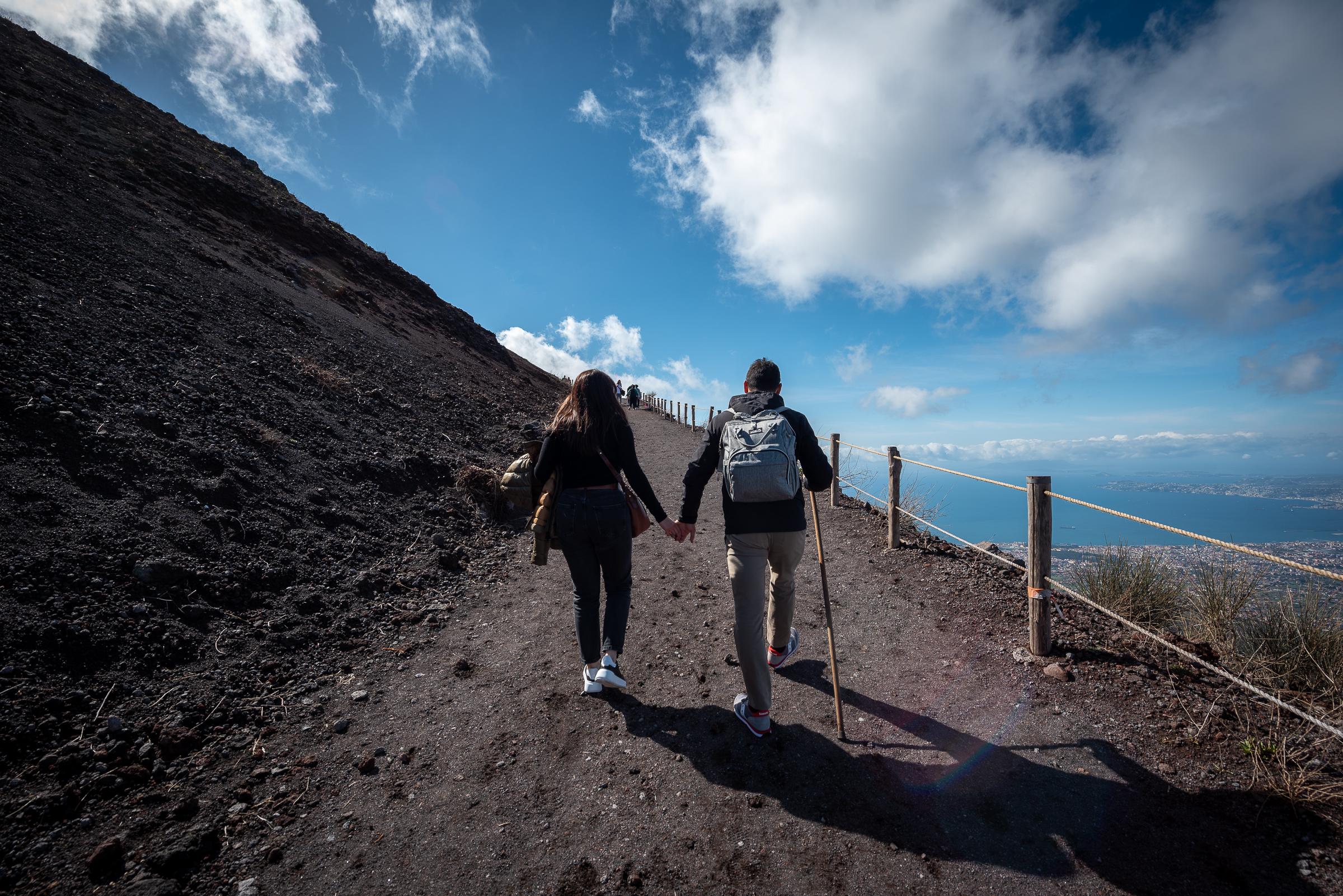
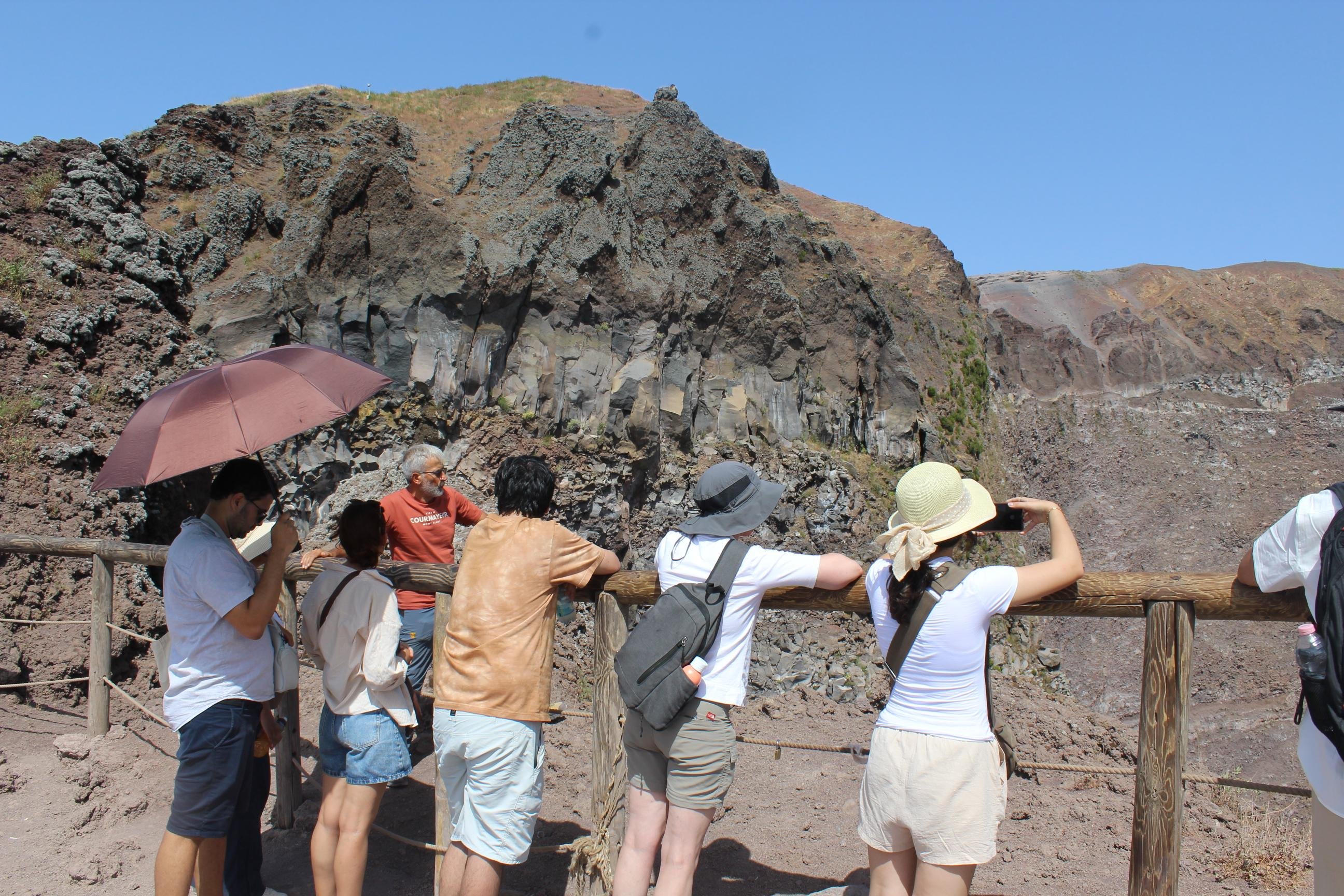
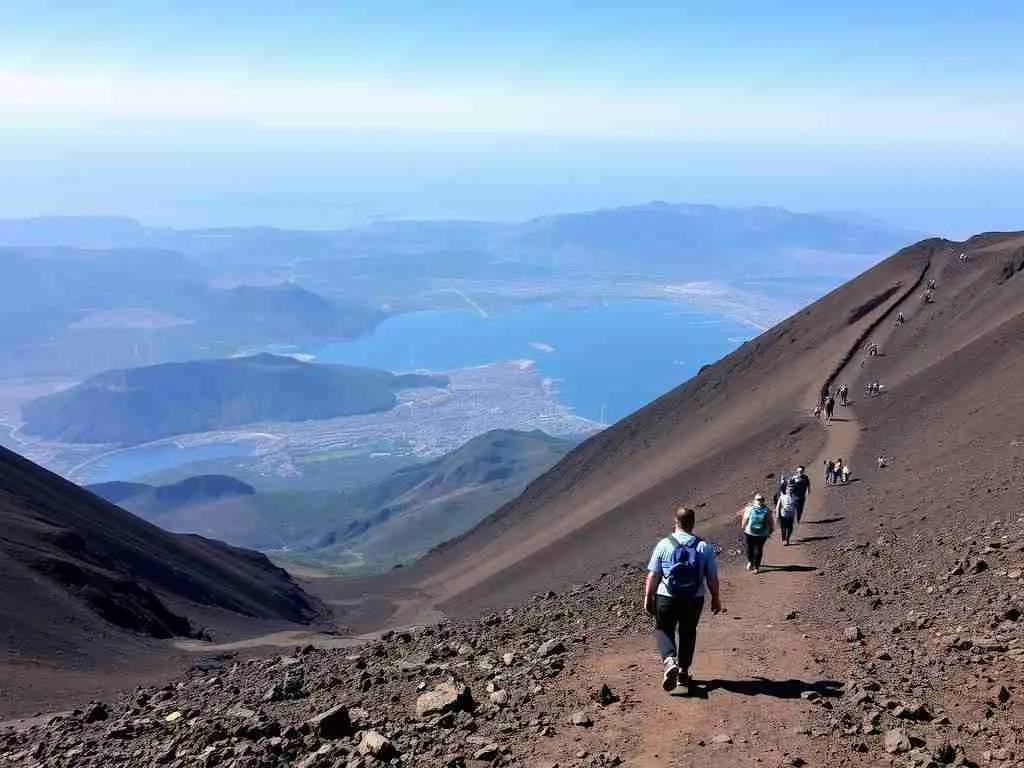
By early afternoon you board the transfer and climb the switchbacks. The last stretch is on foot — a loose gravel path of volcanic scree that rises to the crater rim, where sulphur vents smoke below the edge. You lean on the railing and look down into 1,281 metres of collapsed cone.
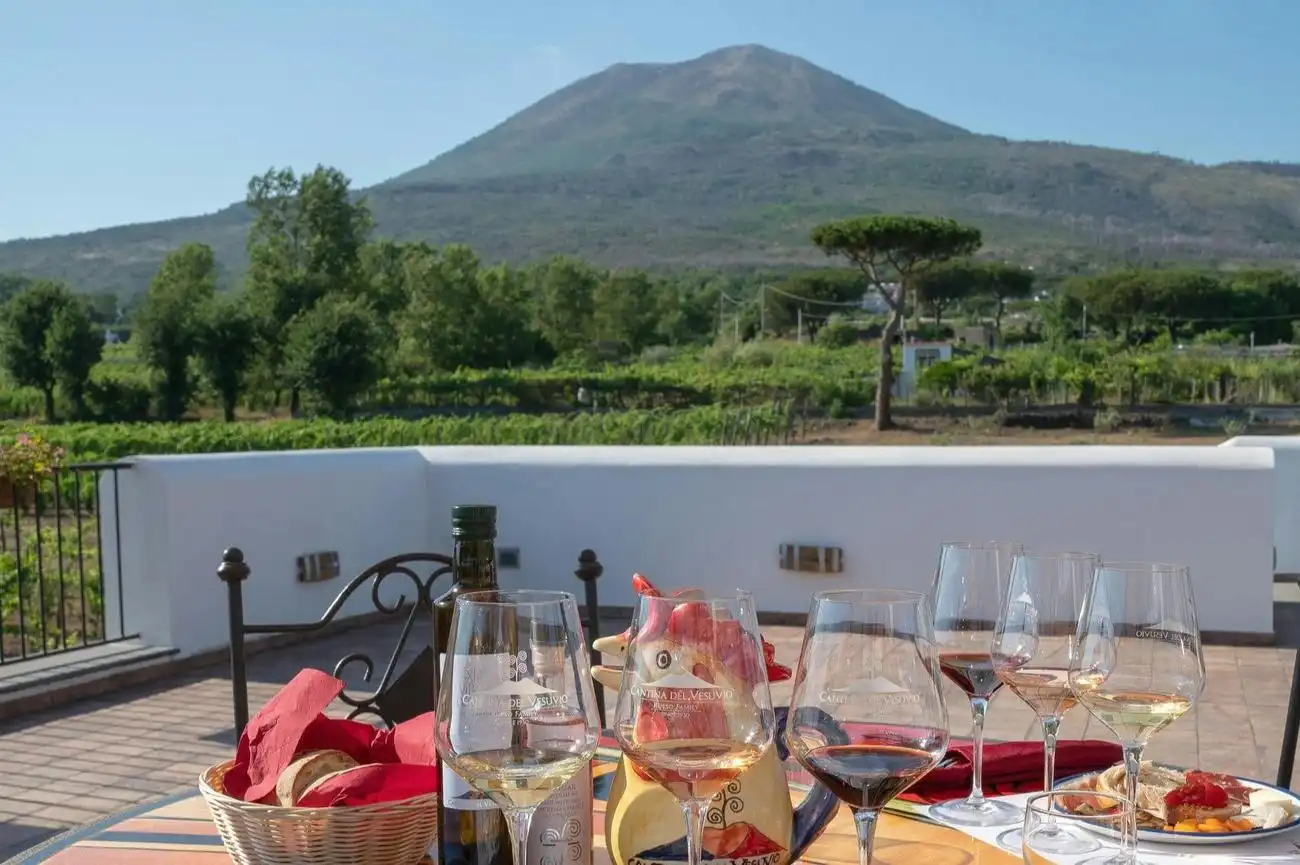
The descent ends at a working estate. You sit under a pergola, taste Lacryma Christi poured young and cold, and eat what the kitchen sends out. Most pompeii and vesuvius wine tour bookings close exactly here, glass in hand, ruins somewhere below the vines.
All the details about your upcoming adventure in one place
A pompeii and vesuvius wine tour pairs the excavated streets of the Roman city with the volcanic slopes that buried it, closing at a family winery on the mountain's fertile flank. Guided groups walk the Forum, the Villa dei Misteri and the plaster casts before ascending toward the Gran Cono crater rim, where the Bay of Naples opens below. Most pompeii and vesuvius wine tour tours finish with a tasting of Lacryma Christi reds and whites grown in mineral-rich ash soil, served alongside local cheeses and bread.
The vines growing on Vesuvius today are planted in the same ash that buried Pompeii in 79 CE. That continuity — destruction turned to fertility — is the through-line of every pompeii and vesuvius wine tour, and it explains why the two sites are almost never sold apart.
The archaeological park covers roughly 44 hectares, of which about two-thirds has been excavated since digging began in 1748. Streets survive with their cart ruts intact. Bakeries retain their millstones. The Villa dei Misteri holds a megalographic fresco cycle in Pompeian red, its figures near life-size. Amphorae recovered from cellars and taverns confirm what the region already knew: wine was made here, stored here, and traded from the Bay of Naples across the empire. Visitors asking whether Mount Vesuvius is in Pompeii find the answer geographically simple — the cone stands about nine kilometres north of the town, close enough that it dominates the skyline above the Forum and the Temple of Jupiter.
Significance today rests on scale rather than spectacle. Pompeii is the fullest surviving record of an ordinary Roman city, complete with graffiti, shop counters, election notices and drainage. Vesuvius, still an active stratovolcano monitored by the Osservatorio Vesuviano, supplies the second half of the story. Its slopes carry DOC vineyards producing Lacryma Christi del Vesuvio from Coda di Volpe, Falanghina, Piedirosso and Aglianico — grapes rooted in porous lapilli soil that survived phylloxera when much of Europe's stock did not. A pompeii vesuvius winery tour typically pairs the Gran Cono crater rim, at 1,281 metres, with a cellar visit on the southern flank.
Architecturally, the contrast is deliberate. Below: opus incertum walls, peristyle courtyards, the stone theatre seating some 5,000. Above: terraced rows, volcanic gravel, and long views over the Sorrentine Peninsula and Capri. The question of how long to visit Pompeii and Vesuvius is answered by the layout itself — the ruins reward hours, the crater path a focused ascent. Formats vary. Some are structured as a pompeii tour lunch and vesuvius wine tasting; others run as a single guided pompeii and vesuvius wine tour tour with transfers between the two. UNESCO inscribed Pompeii, Herculaneum and Torre Annunziata in 1997, and the listing remains the reference point for conservation on both slopes. Whether the pairing can be done in one day is a scheduling matter, not a geographic one — the sites sit within a short transfer of each other, bound by the same eruption.
The vines growing on Vesuvius are planted in the ash that buried the city below.
Casual, respectful attire is required; visitors should wear comfortable walking shoes suitable for uneven stone streets. Bare-chested clothing is strictly prohibited throughout the archaeological site.
Bags larger than 30x30x15 cm are not allowed; use the free cloakroom services available at the entrances to the archaeological site. Security may conduct random checks at any point during your visit.
Personal photography is permitted without flash or professional equipment like tripods and drones. Commercial photography for a pompeii and vesuvius wine tour requires formal prior authorization.
The site is family-friendly, with baby-changing facilities located at three stations. Younger visitors should remain supervised near uneven ruins and open excavations.
The Pompeii for All itinerary provides a 3.5 km route for mobility-impaired visitors starting from the Piazza Anfiteatro entrance. Wheelchair users should note that some ramps exceed 8% incline.
Eating is only allowed in designated areas, and visitors are encouraged to bring refillable water bottles for the park fountains. Outside of these zones, guests on a pompeii and vesuvius wine tour may utilize the café near the Forum.
Opening hours
09:00–19:00 daily
Address
Pompei, Metropolitan City of Naples, Italy
Accessibility
Wheelchair accessible via specific routes
Best arrival window
09:00–10:30
Storage
Free luggage facilities at entrances
Navigation
Map available at site entrances
Public transport · 45 min · Budget-friendly
Take the Circumvesuviana train to Pompei Scavi – Villa dei Misteri.
Car · 30 min · Variable parking fees
Use the A3 motorway and exit at Pompeii Scavi.
Non-transferable tickets for the pompeii and vesuvius wine tour are non-refundable except in cases of park closure. Visitors must present a valid ID to match the name on the entrance ticket.
Recommended time
Full day (7-9 hours)
A comprehensive pompeii and vesuvius wine tour requires a full day to navigate the expansive archaeological site and complete the steep caldera ascent. Visitors booking pompeii and vesuvius wine tour tickets often underestimate the walking distance through the ancient basalt streets and the time required for travel between locations. Adding a vineyard lunch to your pompeii and vesuvius wine tour tours creates a balanced rhythm, providing shade and relaxation before exploring the volcanic summit. If you prioritize deep exploration of the ruins, you may need to reduce your vineyard time to avoid arriving at the crater trail during the hottest afternoon hours.
Crowd levels through the day
Weather · crowds · average price — dots go green to amber to red as each metric rises.
April–May offers mild weather and blooming flora for a pompeii and vesuvius wine tour.
June–August is warm but requires early arrival for the best experience.
September–October provides comfortable temperatures and pleasant hiking conditions.
November–March is quieter with shorter days but fewer crowds.
Visit the Forum and main streets before 10:30 AM to avoid the heaviest pedestrian traffic.
Wear sturdy, closed-toe walking shoes as the ancient basalt roads are uneven and dusty.
Utilize the public fountains throughout the site to stay hydrated without carrying excess weight.
Prioritize the Amphitheatre or Villa of the Mysteries early to minimize backtracking across the 163-acre site.
Always book your pompeii and vesuvius wine tour tickets online in advance to guarantee entry and avoid queues.
Wine came before catastrophe. Excavators have identified more than two hundred cauponae and thermopolia inside the walls of Pompeii, alongside vineyards traced by root cavities in the Forum Boarium plot, replanted in 1996 under the direction of the Soprintendenza with Mastroberardino. The volcanic soil of the Sarno plain was already prized. Pliny the Elder, writing his Naturalis Historia in the 70s AD, named Vesuvinum among the wines of Campania. Amphorae stamped with the mark of Eumachia, a priestess and patroness of the fullers' guild, travelled from this coast to Gaul. The eruption of 79 AD ended the trade and preserved its evidence. Pliny the Younger, in two letters to Tacitus composed around 106 AD, described the column of ash and his uncle's death at Stabiae. Pumice fall sealed the city; pyroclastic surges finished it. What buried the vineyards also fossilised them, and any serious pompeii and vesuvius wine tour depends on that paradox. Rediscovery began in 1748 under Charles of Bourbon, though systematic method waited for Giuseppe Fiorelli, appointed director in 1863, who devised the plaster casting technique and divided the site into regiones. The name Lacryma Christi belongs to a later tradition, attested from the medieval period and popularised by Benedictine cultivation on the mountain's southern slopes. The grapes are Coda di Volpe, Verdeca, Falanghina, and Piedirosso; the DOC was granted in 1983. Phylloxera spared much of the Vesuvian cone because vines root in loose lapilli, so ungrafted stock survives here. The 1944 eruption, filmed by Allied airmen, destroyed vineyards at San Sebastiano and Massa di Somma and remains the last activity of the volcano. A visitor comparing Pompeii landmarks with a working cantina inherits two millennia of the same ground. Book pompeii and vesuvius wine tour tickets with that continuity in mind, since a single pompeii and vesuvius wine tour tour joins ruin and vineyard, and guided pompeii and vesuvius wine tour tours frame the archaeological park against a still-active volcano.
Vesuvius erupts, burying Pompeii under pumice and pyroclastic surge and sealing its vineyards and wine shops.
Pliny the Younger writes two letters to Tacitus describing the eruption column and his uncle's death at Stabiae.
Excavation of Pompeii begins under Charles of Bourbon, initially treated as a treasure hunt rather than a scientific dig.
Giuseppe Fiorelli becomes director, introduces the plaster cast method and organises the site into numbered regiones.
The last eruption of Vesuvius destroys vineyards at San Sebastiano and Massa di Somma.
Lacryma Christi del Vesuvio receives DOC status, formalising the Coda di Volpe, Verdeca, Falanghina and Piedirosso blends.
Mastroberardino replants ancient vineyard plots inside the walls using root cavity evidence from the excavations.
UNESCO inscribes the archaeological areas of Pompeii, Herculaneum and Torre Annunziata on the World Heritage List.
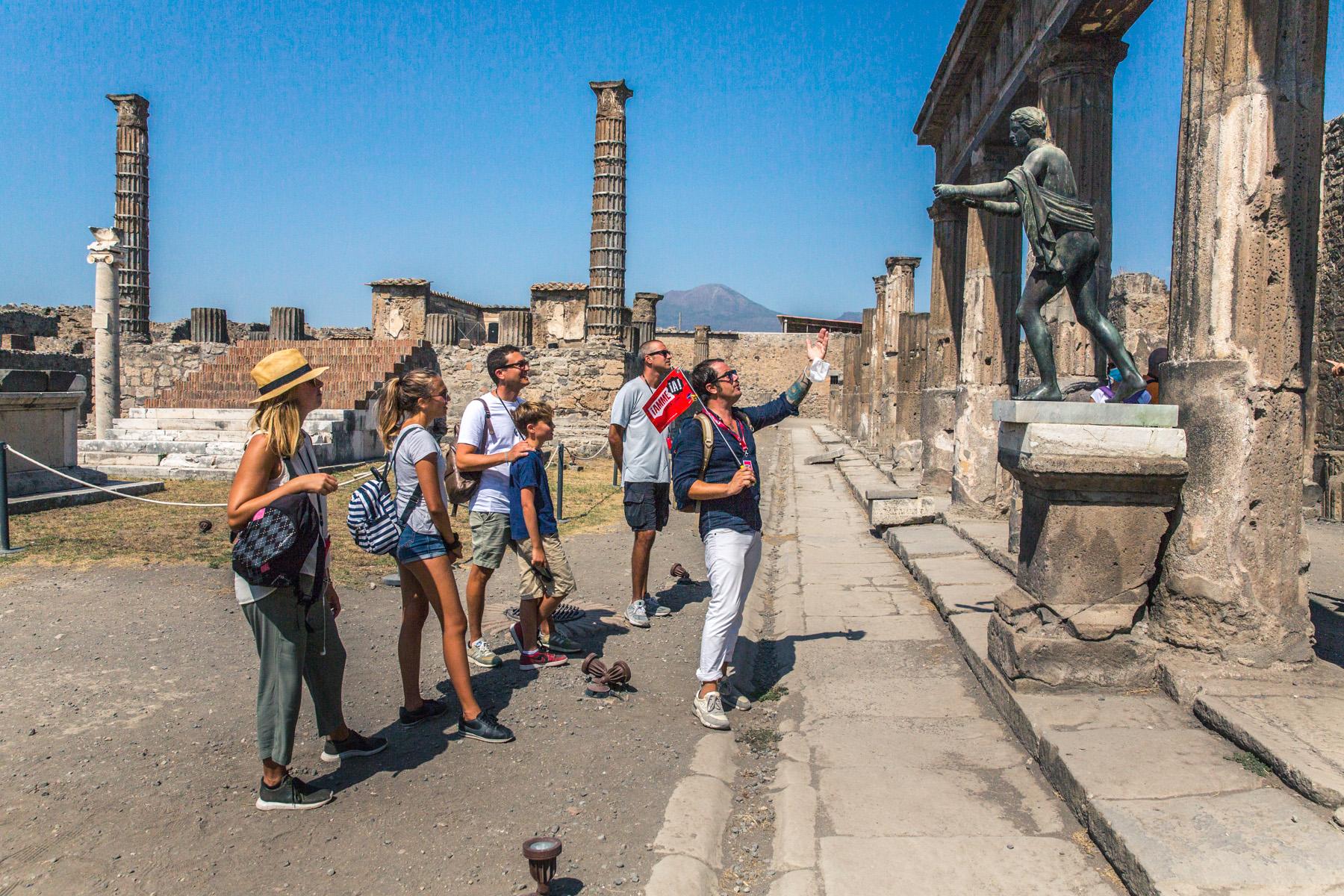
Stand at the northern end of the square to frame the ancient stone columns with the towering peak of the volcano in the background. This perspective highlights the scale of the archaeological site during your pompeii and vesuvius wine tour.
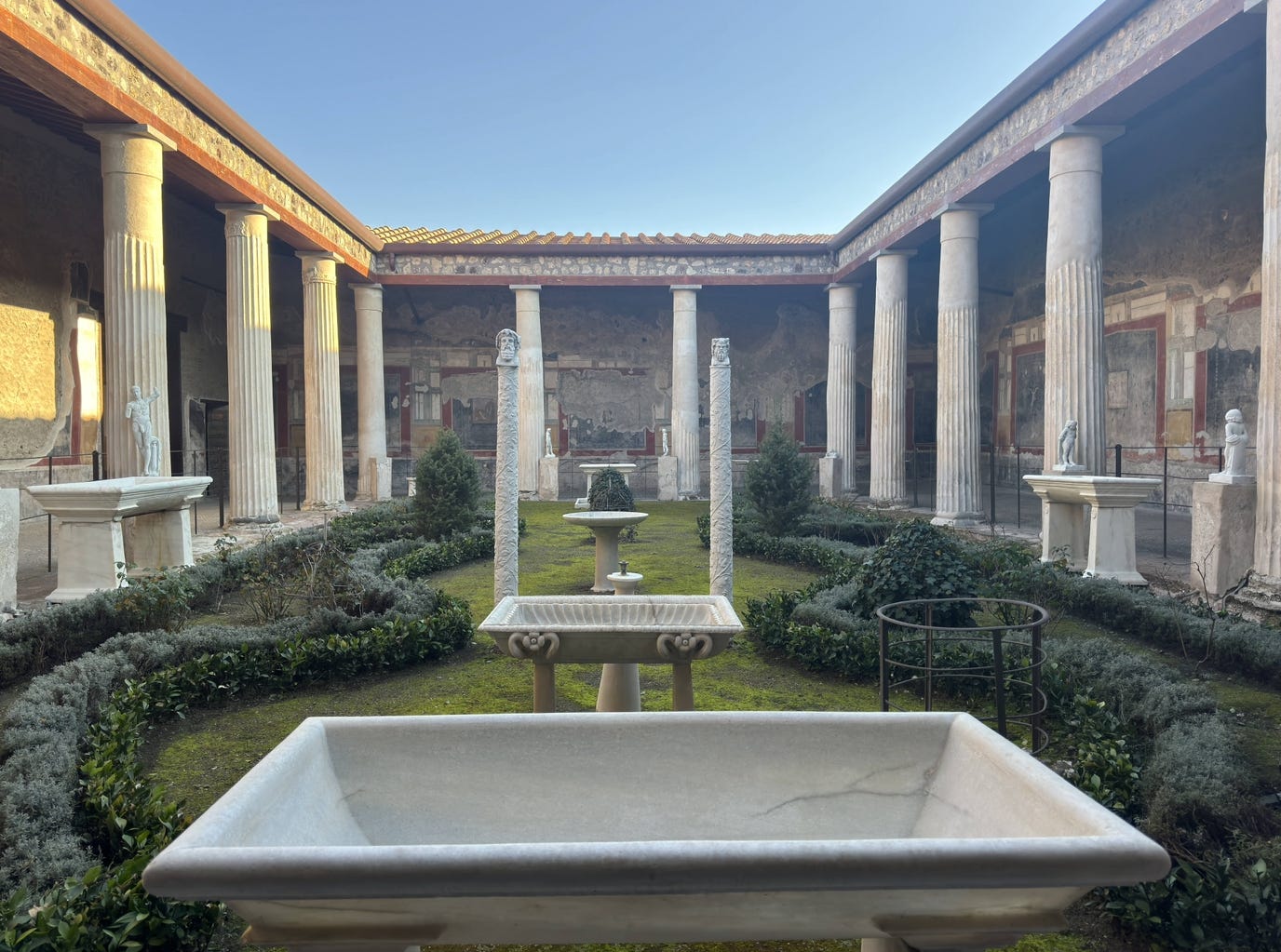
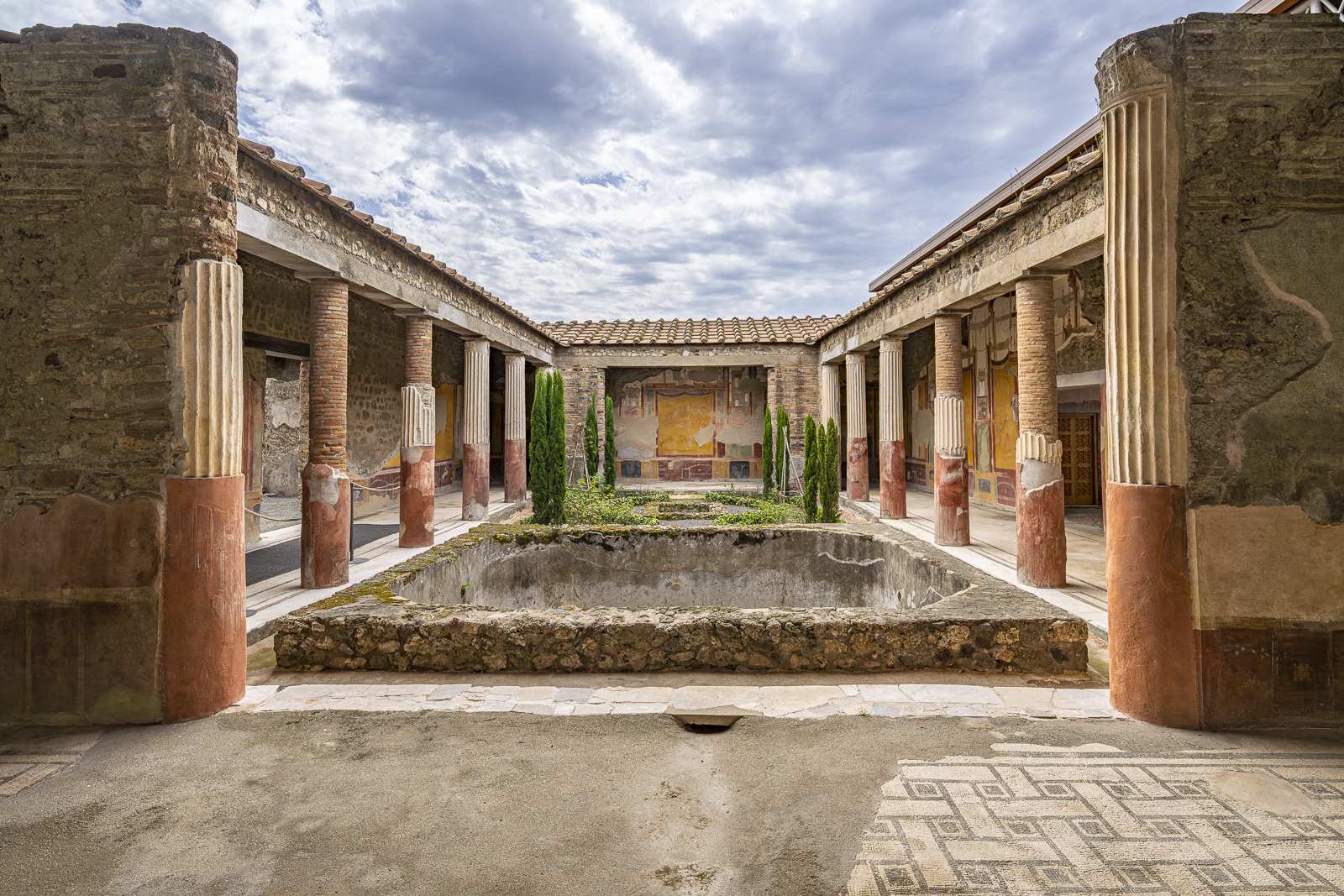
Capture the preserved frescoes and the central peristyle garden, which offers a framed composition of the architecture against the sky. This location is a highlight for those seeking to document the refined living standards of Roman antiquity.
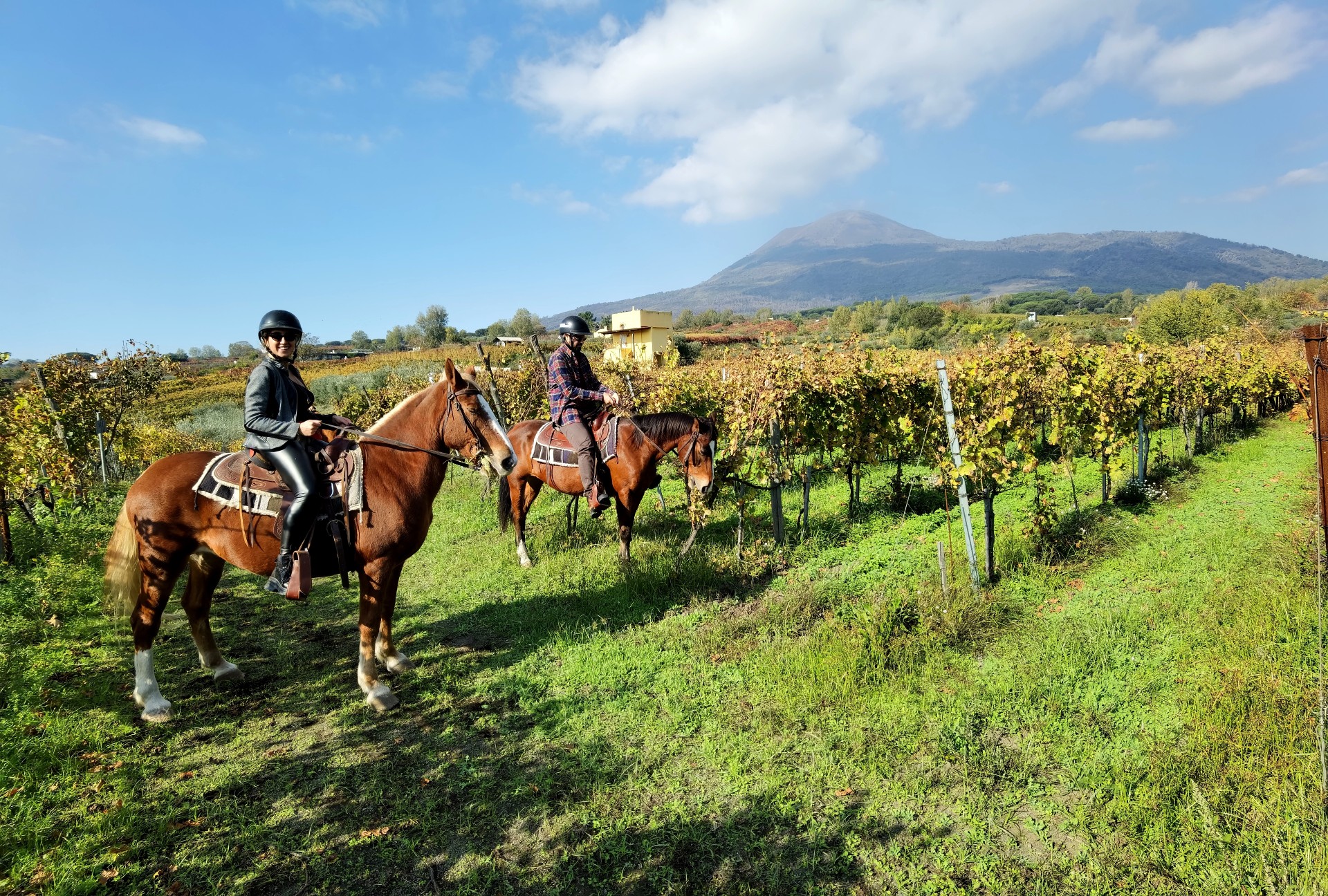
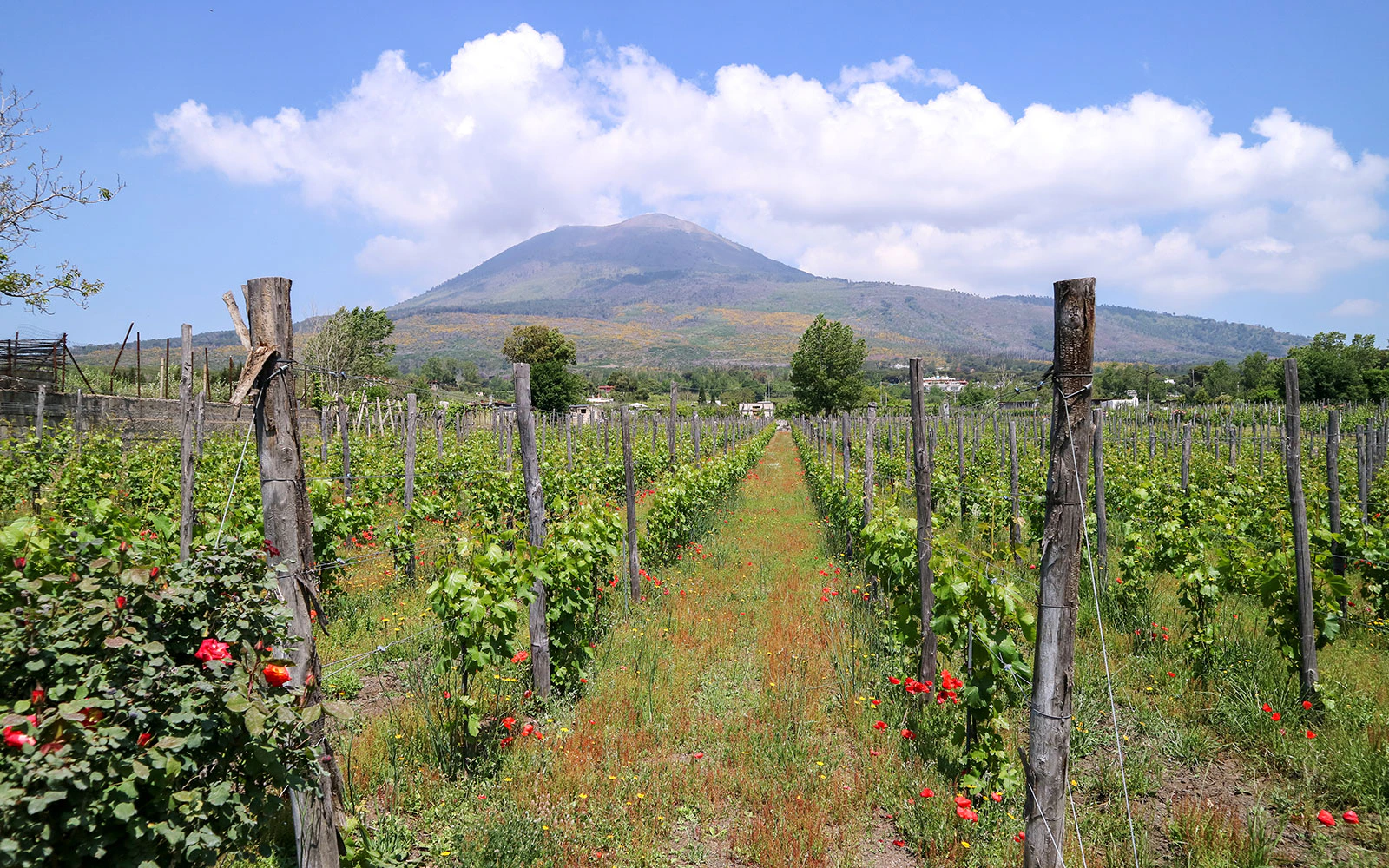
Position yourself on the slopes near the archaeological park to photograph the rows of vines with the volcanic summit looming above. These sites are frequently included in a pompeii and vesuvius wine tour tour to showcase the local viticulture.
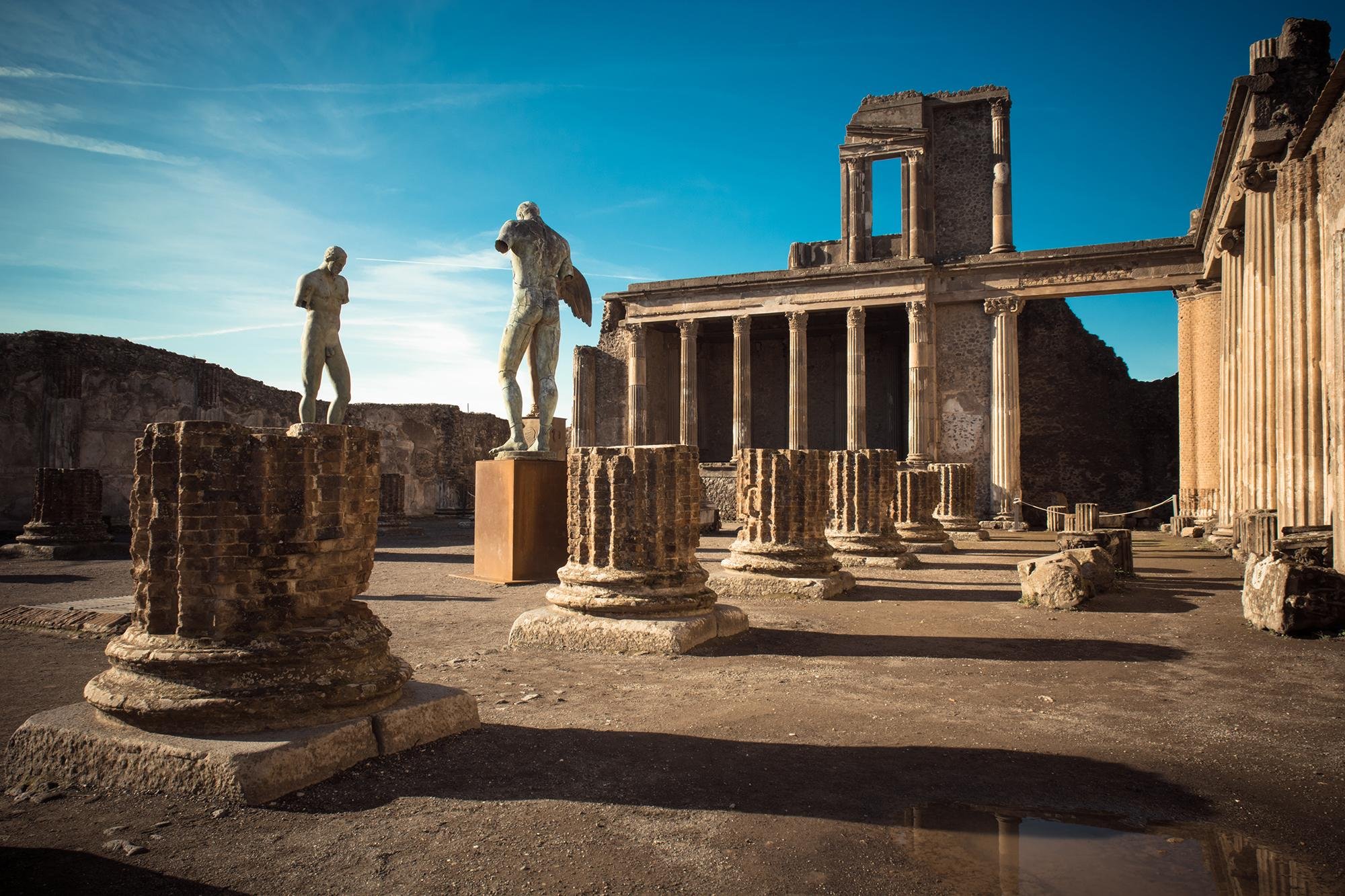
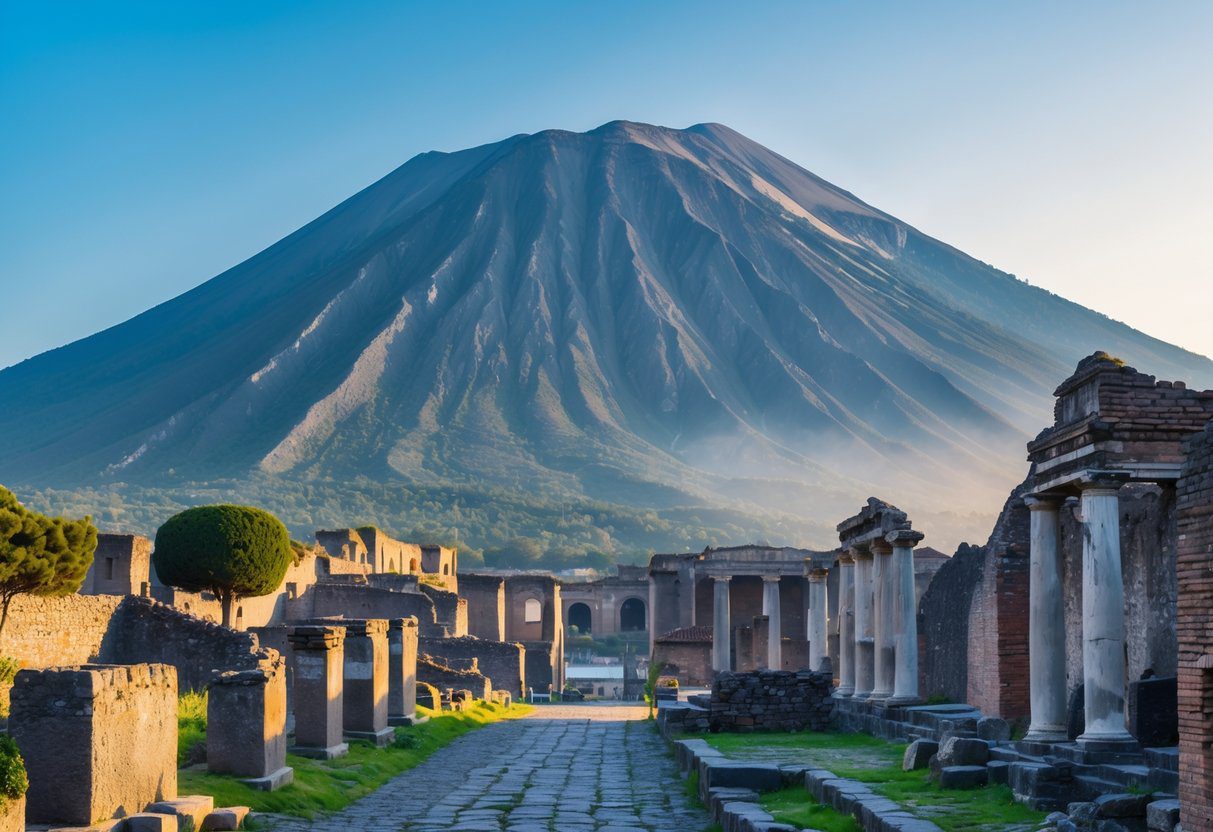
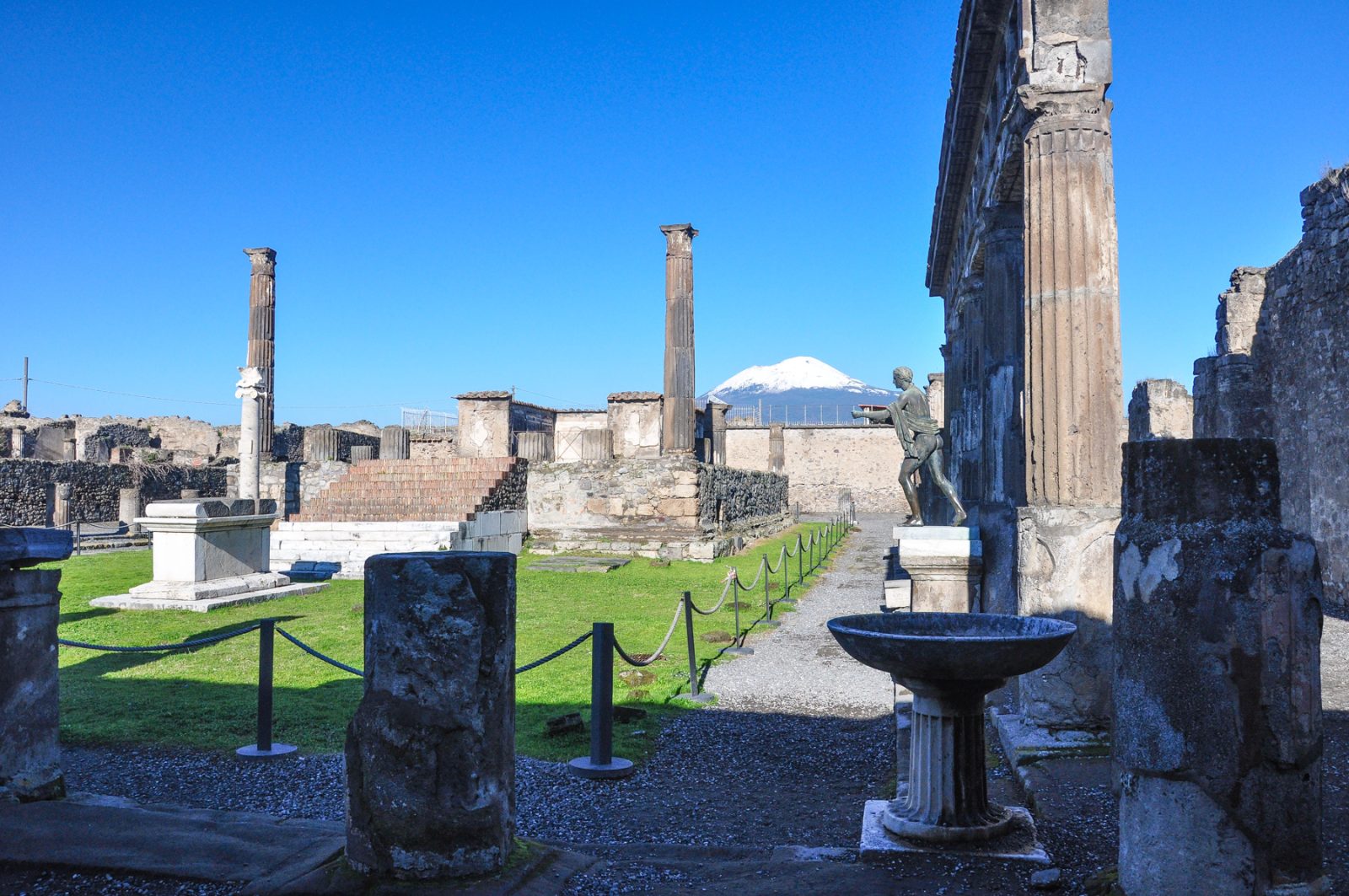
Position the camera low near the decorative statues to include the marble columns and the distant silhouette of the mountain. This spot captures the juxtaposition of Roman religious structures and the volcanic landscape experienced during pompeii and vesuvius wine tour tours.
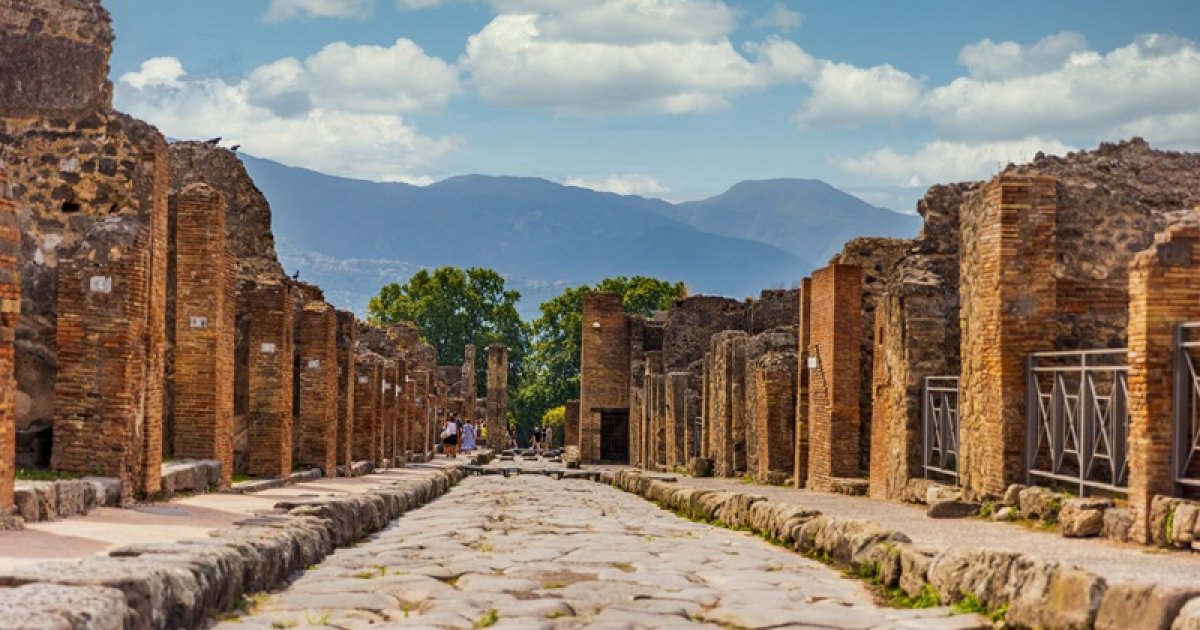
Use a wide angle to shoot down the classic Roman thoroughfare, capturing the chariot ruts in the stone and the mountain vistas at the end of the road. This provides a sense of depth and scale for your pompeii and vesuvius wine tour tickets collection.
Dining options are plentiful near a pompeii and vesuvius wine tour, ranging from casual eateries within the archaeological park to sophisticated vineyards on the mountain slopes. Many visitors combine their archaeological exploration with a visit to local vineyards that offer tastings of Lacryma Christi wine, a classic pairing for those on a pompeii and vesuvius wine tour tour.
This venue recreates an ancient Roman tavern experience, serving historical recipes in an immersive setting. It is a popular choice for those finishing their pompeii and vesuvius wine tour tickets.
Real experiences from real travelers
We booked the pompeii and vesuvius wine tour mostly for the ruins and came away obsessed with the vineyard half. The soil on the Vesuvius terraces is genuinely black and crumbly, nothing like the clay back home, and the vintner let us dig a handful to feel how light the pumice is. Bring a hat because the tasting pergola only shades half the table by mid-afternoon.
The Lacryma Christi bianco was served cold enough to fog the glass, which mattered at thirty-one degrees. Our guide explained how the 1944 eruption reshaped which slopes are planted today, and you can still see the lava tongue from the terrace. Piedirosso was the surprise of the day for me, lighter than expected and very drinkable with the taralli.
Walking Via dell'Abbondanza with Vesuvius sitting at the end of the street is something photos never quite convey. Our small group tour of Pompeii moved slowly enough that I could actually read the plaster graffiti near the bakery. The stones radiate heat by noon, so sturdy soles are not optional.
Plenty to like on this pompeii and vesuvius wine tour, though the crater walk plus the archaeological park in one go is more walking than the description suggests. The gravel on the Gran Cono path is loose and my sneakers filled with red scoria within minutes. The winery lunch afterwards more than made up for it and the caciotta was excellent.
We had the forum almost to ourselves in the late afternoon, columns throwing long shadows across the paving. The guide pointed out the volcanic tuff and travertine used in different rebuilds, which I would never have noticed alone. Pompeii and Vesuvius tickets sorted in advance meant no queueing at Porta Marina.
Standing at the crater rim you can smell faint sulphur and see vapour drifting from the fumaroles on the far wall. The wind up there was strong enough that I regretted not bringing a light jacket in August. Down at the vineyard the Gulf of Naples opened up below us with Capri just visible in the haze.
Off-season the ruins were quiet and the light was low and gold by three in the afternoon. Our guide on the Pompeii and Vesuvius wine tour tours we compared beforehand seemed the most knowledgeable about the amphitheatre and the House of the Faun mosaics. The vineyard tasting indoors by a fire was an unexpected pleasure.
The vintner walked us through the pergola-trained vines and explained why the roots go so deep in that ash. Back in the archaeological park the peristyle gardens with their red frescoes were the highlight for my wife. A pompeii and vesuvius wine tour ticket that bundles both is far less hassle than arranging the Circumvesuviana ourselves.
We joined during harvest and crates of Piedirosso were being carried past the tasting table the whole time. Skip-the-line entry to Pompeii saved us standing in the sun at the gate with a hundred other people. The guide's Italian and English were both fluent which helped my parents follow along.
A well-run pompeii and vesuvius wine tour tour with a guide who knew both the archaeology and the viticulture, which is a rare combination. The bus stretch between the crater car park and the winery is short but winding. Two litres of water each was about right for the day.
Everything you need to know for your journey
The archaeological park is open from 09:00–19:00 daily.
Yes, the Pompeii for All itinerary is specifically designed to be wheelchair accessible.
No, bags larger than 30x30x15 cm are prohibited and must be stored at the entrance cloakroom.
Personal photography is allowed, but professional equipment for a pompeii and vesuvius wine tour requires permission.
The best arrival window is 09:00–10:30 to avoid peak midday crowds.
Casual, respectful attire is required, and bare-chested visitors are not permitted.
There is a café near the Forum, but consumption is restricted to designated areas.
You can reach the site via the Circumvesuviana train or private car using the A3 exit.
Yes, families are welcome, though be prepared for walking and ensure children stay on paths.
Tours are generally non-refundable unless there is a park closure; check your specific provider's terms.
A beautifully preserved religious site near the Forum.
Famous for its intricate mosaics and atrium design.
Features poignant plaster casts of the eruption victims.
One of the oldest and most ornate bath complexes.
Various hotels near the archaeological entrance.
Quiet area with historic guesthouses.
High-end hotels with convenient transport links.
Join thousands of happy travelers who have discovered this incredible experience
Book Your Experience Now